What is MeRT?

MeRT® is a treatment modality that can greatly improve your quality of life. However, if you are under the care of another physician or therapist, we encourage you to continue to see them for your care.
What is MeRT?
MeRT®, or Magnetic e-Resonance Therapy, is a state-of-the-art treatment modality that can be used to treat areas of the brain that are not operating in sync with each other. The brain is a bundle of organized electricity consisting of neurons and pathways. When those pathways are disrupted or out of sync, the brain cannot operate as effectively or communicate with itself optimally.
- It’s a form of rTMS
rTMS, or repetitive Transcranial Magnetic Stimulation has been used for years to treat brain dysregulation associated with various neurological conditions. - MeRT vs rTMS
MeRT utilizes rTMS but can be more effective because MeRT is a customized and tailored approach specifically for YOUR brain. - Features of MeRT
MeRT is non-invasive, DRUG-FREE, and painless. - MeRT and other therapies
If you are utilizing other types of therapies, MeRT can help to accelerate your progress through those as well.
Many patients who have been on medications may have also suffered side effects or the medication may not have been as effective as hoped. MeRT can treat some conditions that medications have not been effective in treating. We don’t recommend any medication changes without direction from your doctor.
The qEEG is the Key
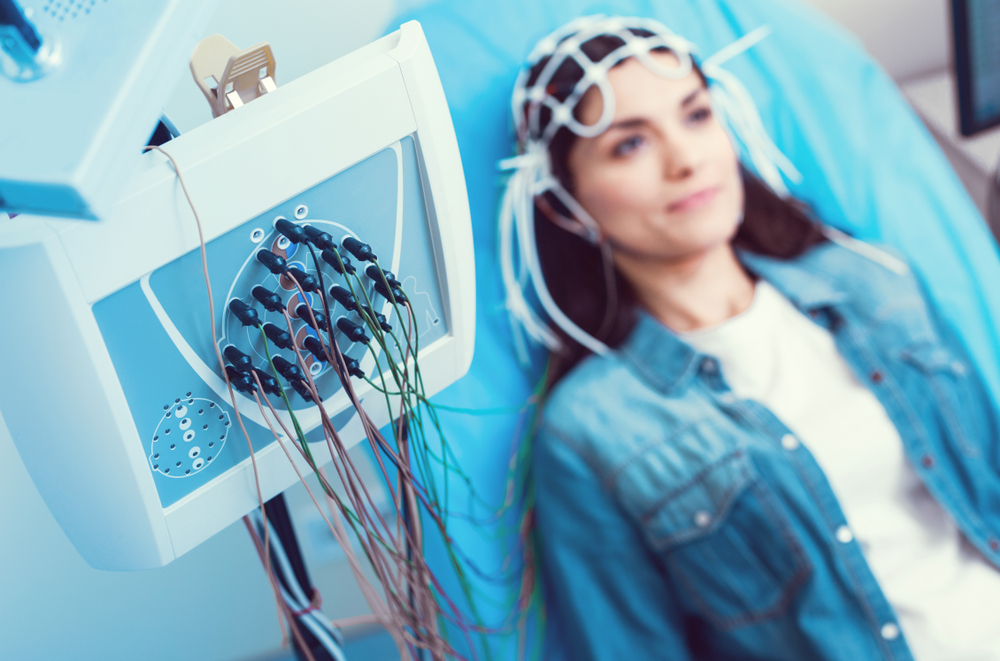
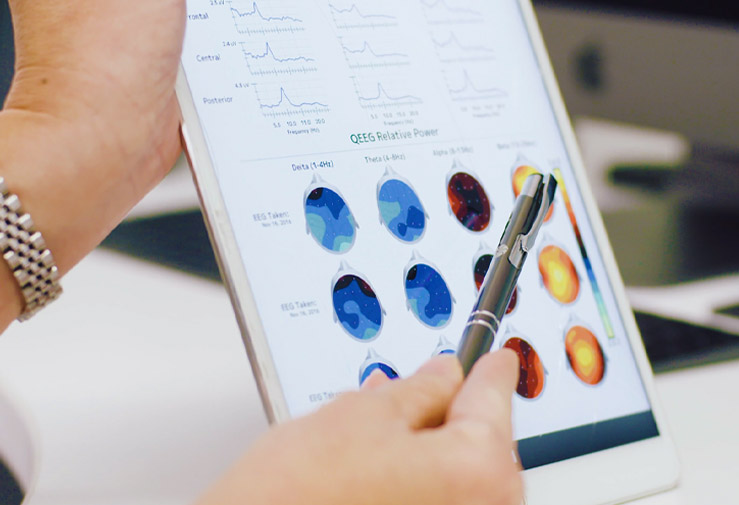
A qEEG, or quantitative electroencephalogram, is used to measure the electrical patterns in the brain to create a “brain map.”
This test shows where in the brain dysregulation may be occurring. A qEEG is the first step in MeRT treatment because once the results are analyzed and interpreted by your physician and brain scientists, a precise treatment protocol can be created specifically for each patient.
Everyone’s brain is different; yours is as unique as your fingerprints. And, your brain may be operating at different hertz than someone else.
Because MeRT incorporates the qEEG with rTMS, it is a targeted approach for your brainwave patterns.
Contact Us for more Information
Call the New Patient Coordinator at this number, or fill in the Contact Form below and she will contact you.

Conditions Treated
There is a variety of health conditions that have been treated by MeRT including, but not limited to:
- Depression
- Anxiety
- Autism
- TBI (traumatic brain injury) and post-concussive syndrome
- PTSD (post-traumatic stress disorder)
- After-effects of stroke
- Cognitive decline and Dementia
- Some chronic sleep conditions
- Parkinson’s disease
These conditions are often associated with atypical patterns of neural oscillations, reflecting altered brain network activity.
Magnetic e-Resonance Therapy (MeRT) is designed to modulate these neural oscillations with the goal of promoting more stable and coordinated brain activity. The therapy uses non-invasive, low-intensity magnetic stimulation applied to targeted areas of the scalp to influence underlying neural circuits. Through repeated sessions, MeRT aims to support neuroplasticity—the brain’s ability to reorganize and form new neural connections—which may be beneficial in cases involving disrupted or impaired brain function.
It’s common for some people to have more than one mental health condition. For example, you may be experiencing depression and anxiety or have had a traumatic brain injury that has caused you to be depressed or experience PTSD. Our tailored treatment can address more than one condition.
Your Brain is Like a Symphony
To better explain how MeRT works in layman’s terms, think of the healthy brain as a perfectly orchestrated symphony. When the brain is not communicating as it should, the neural pathways in the frontal lobe are not on the same wavelength as the pathways in the back of the brain.
If you’ve ever listened to an orchestra or symphony warm-up before a performance, it sounds like everyone is off-key. But, once the performance starts and everyone is in the same key, the music sounds harmonious and fluid.
When brain signals are not communicating effectively, they are out of sync with each other, and are “out of tune.” MeRT treatment gently pulls those signals and pathways back together in sync so that like a symphony, your brain is all in the same key.


Benefits of MeRT
MeRT has many benefits that can include:
- Improved sleep
- Improved relaxation (less nervousness or anxiety)
- Better concentration and focus
- Improved mental clarity
- Better mood
- Increased ability to cope with stress
- Increased motivation
- Improved emotional stability
- Increased attention span
- Better sociability
- Better ability to adapt to change
- Improved self-confidence and self-esteem
** Results are not guaranteed. Most patients will experience benefits, however these vary from patient to patient.
Contact Us for more Information
Call the New Patient Coordinator at this number, or fill in the Contact Form below and she will contact you.
How Long Does Treatment Last?
The treatment sessions last about 30-minutes and are administered every day, Monday through Friday.
Generally speaking, MeRT takes about 6-weeks to be long-lasting and effective. For some, it may take a little longer; it depends on your specific condition and how your brain reacts to treatment.
The qEEG is repeated every two weeks which will show whether or not your brain is responsive to treatment. Your clinical progress is also tracked during your daily visits to the clinic. Some patients may feel immediate improvements starting within the first week or two. For others, it may be week 3 or 4 before you start to notice significant changes.
In most cases, treatment will last a lifetime and doesn’t need to be repeated after the initial 6-8 weeks. For others, especially those with autism, you may have further benefits from a periodic short period of treatment.
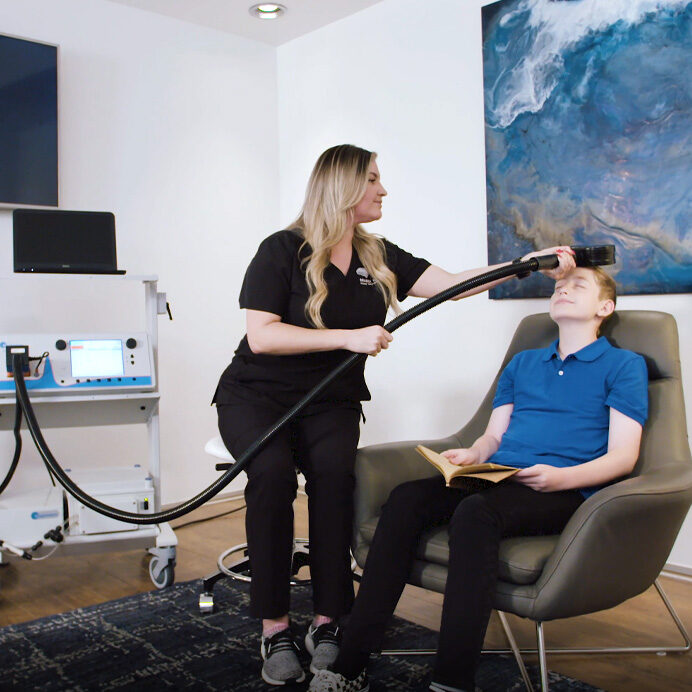
No two brains are the same and thus no two treatment programs are the same either. Each patient’s therapy protocols are mapped based on their individual diagnostics.

The TMS equipment used in MeRT treatment is FDA-cleared. And TMS for the treatment of Major Depressive Disorder and OCD is FDA-approved. It is used off-label to treat other conditions.
What are the Side-Effects of MeRT Treatment?
The most common side-effect of MeRT is a slight headache after treatment. This can easily be treated with a pain reliever such as Ibuprofen or Tylenol. These types of slight headaches should subside as you get used to the treatment.
Another side-effect may include a slight increase in symptoms for a short time period while your brain gets used to the treatment, though this doesn’t happen with most patients, it can occur in rare times. MeRT is a therapy for your brain and will involve changes in the neural pathways.
It is similar to starting physical therapy or an exercise program if you have been inactive for a while. In the beginning, your body might experience some soreness because you are using muscles that haven’t been used for a while. But, as you continue with your exercise program, you will start to feel less sore and as more time goes on, you won’t experience any soreness at all.
Some people report feeling fatigued after treatment. This is because the treatment stimulates the neurons in your brain which causes your brain to use more energy than usual. A light snack after your treatment session can help prevent fatigue.
There is a very slight risk of seizure with MeRT. The risk of seizure from MeRT is estimated at 1 in 150,000.

Army Delta Force operator & how MeRT changed his life
It was absolutely terrifying to not know what was wrong with me or how to fix the problem. BTC not only identified the deteriorated state of my brainwave activity, they restored its function… I consider the healing I experienced at BTC to be nothing short of a miracle.”
– Retired Army Delta Force operator, Scott Spooner
Taking the First Step
The first step is contacting the patient coordinator for the clinic that you want to treat with. She can answer all of your questions and advise you of the protocols and fees for the specific clinic.
You can then be scheduled for your qEEG and a consultation with the physician/clinician at the clinic. During the consultation, you will receive the results of your qEEG/brain map. At this point you can decide on treatment.
Contact Us for more Information
Call the New Patient Coordinator at this number, or fill in the Contact Form below and she will contact you.

Because MeRT uses a magnet to administer treatment, not everyone is a candidate for treatment.
Relative contraindications may require closer or adjusted protocols, but do not necessarily disqualify someone from receiving MeRT treatment including:
- History of seizures or seizure disorder
- Titanium shunts or stents
- Spinal cord stimulator
- Non-removable hearing aids
- Ferrous cortical implants
- Magnetic ink tattoo
- Bipolar disorder, Type I/II
- Baha implant
Absolute contraindications include:
- Pacemaker
- Defibrillator
- Vagal nerve stimulator
- VP Shunt/Magnetic intracranial shunts
- Deep brain stimulator
- Steel shunts/stents
- Cranial metal fragments, i.e., shrapnel
- Cochlear implant
- Aneurysm clips, coils, pipelines
- Pregnant or breastfeeding
- Primary brain cancer / metastatic legions in the brain
- Magnetic dental implants
- Implanted cardio defibrillators
- Ocular implants
Contact Us
For more information or to speak with our New Patient Coordinator, please fill in the information below.
"*" indicates required fields